

GET UP TO 50% OFF + FREE SHIPPING

Home > Trending > Dog Health
I've Been a Vet for 14 Years. We've Been Treating "Sensitive Stomachs" Wrong This Entire Time.
Why the dogs on food switches and prescription diets never get solid stools - and what I finally started recommending instead.
As Seen On






June 24th, 2026 | 8:15 am EST
Dr. Megan Ross, DVM

There are certain dogs I'll never forget.
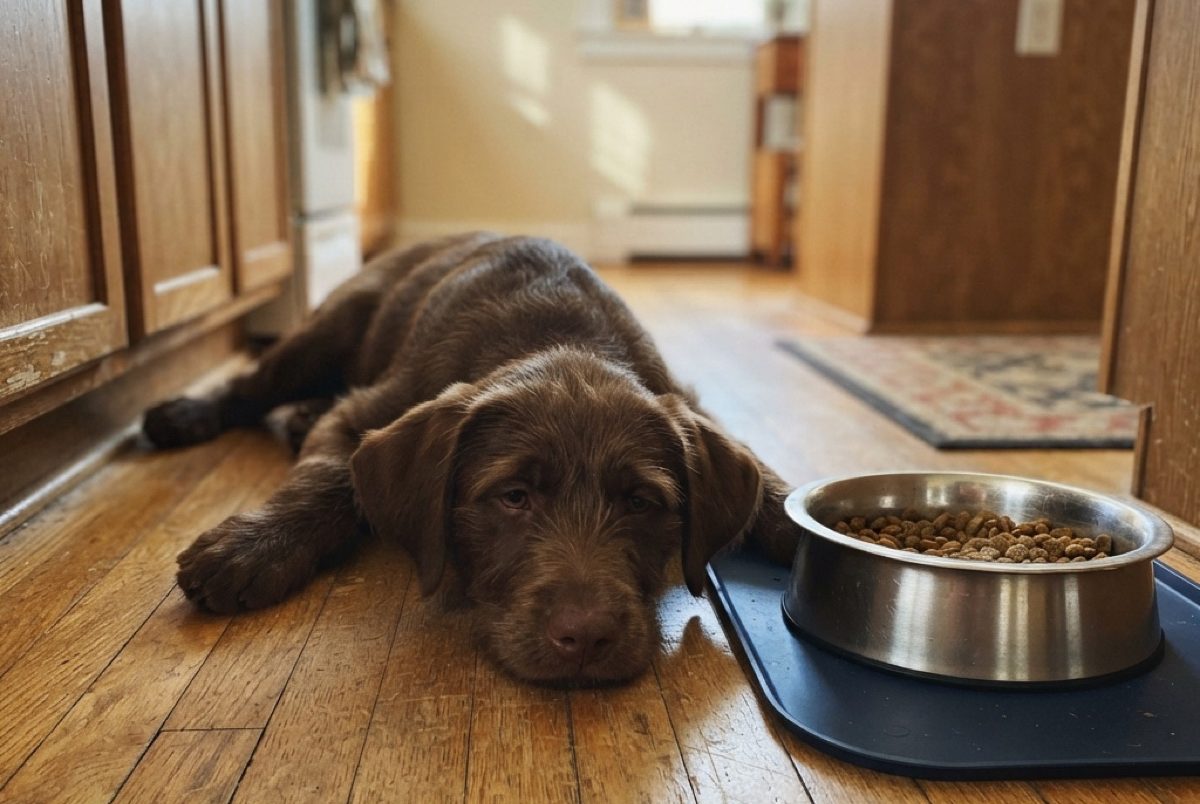
One was a two-year-old rescue Lab mix named Tucker. His owner brought him in on a Friday afternoon.
She had a list on her phone. Four proteins. Grain-free. Chicken and rice. Pumpkin. A prescription diet that cost more than her own groceries. Two years of soft, shapeless stools, and a stomach she could hear gurgling from across the exam room.
She wasn't crying. She was embarrassed. That was worse.
"I know it sounds small," she said. "It's just poop. But I check it every single day. I plan walks around it. I stopped giving him treats. And nothing I do changes anything."
I looked at Tucker's chart. Every food trial. Every bland diet. Over $900 in visits, tests, and prescription bags. And his stools were exactly the same as the day I first met him.
I didn't have a good answer for her. Not that day.
But Tucker is the reason I started questioning everything I was trained to believe about "sensitive stomachs."
If this is your dog, you know the routine by heart. You plan the walk around where he usually goes, and you still end up crouched over something the bag can't really pick up while a neighbor pretends not to watch.
You can hear his stomach gurgling from across the room. And you check every single poop like a lab tech, hoping this is the day it finally holds together. It never quite is.
Here's What Vet School Taught Me About Soft Stools
Dog has chronic soft stool? Rule out parasites. Then call it a sensitive stomach.
Not better? Elimination diet. Switch the protein.
Still soft? Prescription hydrolyzed diet.
Still soft? Bloodwork. Ultrasound talk. Or a shrug: some dogs just have sensitive stomachs.
That's the playbook. I followed it for twelve years.
And I watched the same thing happen over and over: a new food helps for a week or two, then the stools slide right back to soft. A cycle that never actually ends. It just gets more expensive.
I want to be honest about something. For most of my career, I accepted this. "Some dogs just have sensitive stomachs." That's what we're taught. The goal isn't to fix it. The goal is to manage it.
But about two years ago, I started keeping informal notes on my chronic soft-stool cases. Just tracking outcomes. And the pattern was hard to ignore.
Dogs starting a new protein or a prescription diet? Most improved for the first week or two. Good. That's what you want to see.
But by week four or five? Most were right back to soft. The owners kept rotating foods, hoping the next bag would be the one. It never was.
And the owners had quietly given up. They carried extra bags on every walk. They memorized the stomach sounds. They had accepted a digestive problem as a personality trait.
What I had stopped saying out loud is that soft stool is not cosmetic. Most of a dog's immune system lives in the gut. A gut too depleted to form a stool is not doing its more important jobs either, which is why anytime we had a chronic soft-stool dog, we knew that would be the start of a laundry list of other health complications to come. Maybe you have even noticed this pattern starting with yours, but I hope you are not there yet.
Here is why a soft stool is never just a soft stool. Most of your dog's immune system lives in the wall of that gut, so a gut too inflamed to firm up a stool is a gut too compromised to do that job either. The trouble rarely stays in the bowl. It surfaces as the itchy skin, the recurring ear gunk, the low energy and the dull coat, the dog that sleeps more and plays less and slowly stops being the dog you know. You are not imagining the slide. It is one broken system showing up in several places at once.
And it does not stop there. The far end of this road has a name: chronic gut inflammation. Ultrasounds. Biopsies. Steroid trials. Dogs who stop absorbing their food, lose weight they cannot afford to lose, and get sicker no matter what goes in the bowl.
I have sat with families at the end of that road, deciding whether it was kinder to let a dog go, and thought back to the first visit, when it was nothing but a stool that would not firm up. That is what I mean when I say this is not cosmetic.
I'm not saying food never matters. Sometimes it does. But I can say that rotating proteins for two years without ever asking what actually forms a stool isn't something any of us went to vet school feeling great about.
The food isn't the problem, exactly. The problem is what we're NOT doing while we keep changing it.
We're not asking what actually decides whether a stool comes out formed or soft.

The Phone Call That Changed How I Practice
Six months ago, a vet I went to school with, someone I trust, someone who's as skeptical about supplements as I am, called me about a patient she'd been struggling with. A chronic soft-stool dog.
Two years of loose stools. She'd tried everything.
Then she said something I wasn't expecting.
"I stopped changing his food entirely. I put him on a gut restoration protocol. His stools were formed within a week."
I almost laughed. A week? After two years? That sounded like something you'd read on a wellness blog. Not something a board-certified vet would report.
But she was serious. And she wasn't talking about one dog.
"Megan, I've done this with sixteen chronic soft-stool dogs now. Thirteen of them have normal stools every single day. Most changed within the first week. I'm not exaggerating."
She sent me the research she'd been reading. And I need to tell you what I found, because it changed how I think about every soft-stool case that walks into my clinic.
Whether a Stool Is Firm or Soft Is Decided by Bacteria, Not by Food
I know that sounds strange. But it's well-established digestive biology.
Deep in your dog's colon, good bacteria do the final step of digestion. They ferment fiber and produce the compounds that control how much water stays in the stool. When those bacteria are healthy and fed, the water balance is right, and the stool comes out firm and formed.
But when the gut microbiome is disrupted, when beneficial bacteria run low, that balance falls apart. Too much water stays in. The stool comes out soft or shapeless, no matter which protein is in the bowl.
This is why a dog can eat the best food on earth and still never produce a solid stool. And it's why the stool matters more than it looks: it's the visible read-out of the system that runs most of your dog's immune defense. A soft stool every day is a check-engine light that's been on for two years.
Here's what happens with every food switch: the new food changes what goes in. It does nothing about the depleted bacteria doing the work at the other end. So you get a brief honeymoon while the gut adjusts, and then the same soft result from the same understaffed gut.
That's the pattern you know by heart. A promising first week. Then back to soft. Bag after bag after bag.
It looks exactly like a food problem. Every symptom points at the bowl.
But the food isn't the cause. The gut is.
And here's the part that made me sit back in my chair:
Nearly half the dry weight of a dog's stool is bacteria. Not food residue. Bacteria.
The stool your dog produces is literally built by its gut bacteria. When the bacteria are depleted, the product is depleted.
So rotating proteins was never going to fix Tucker. We were changing the menu while the kitchen stood half empty.
We weren't failing because we had the wrong food. We were failing because we were treating a symptom as if it were the disease.
Why Everything Else Fails Too
Once I understood the gut connection, every failed treatment in my career suddenly made sense.
Protein switches and elimination diets. They change the input. In a dog with depleted gut bacteria, every input gets processed by the same understaffed gut. That's why each new protein gives you a hopeful week, then the same soft landing.
Prescription gut diets. Easier to digest, which lightens the gut's workload. That's real, and it's why some dogs improve a little. But easier work for missing bacteria is still missing bacteria. At $100 or more a bag, you're renting a small improvement.
Pumpkin and fiber. Fiber soaks up water and firms things up for a day. It's a sponge, not a repair. Stop the pumpkin and you're right back where you started.
Pet-store probiotics. One strain, nothing to feed it, no repair for the gut wall. The new bacteria pass through without settling. That's why the jar ran out and nothing changed.
I'd been prescribing all of these for years. Confidently. Because that's what I was trained to do.
But looking at it through the gut lens, we were rewriting the menu while the kitchen had no cooks.
So I Did What I Always Do. I Went to the Research.
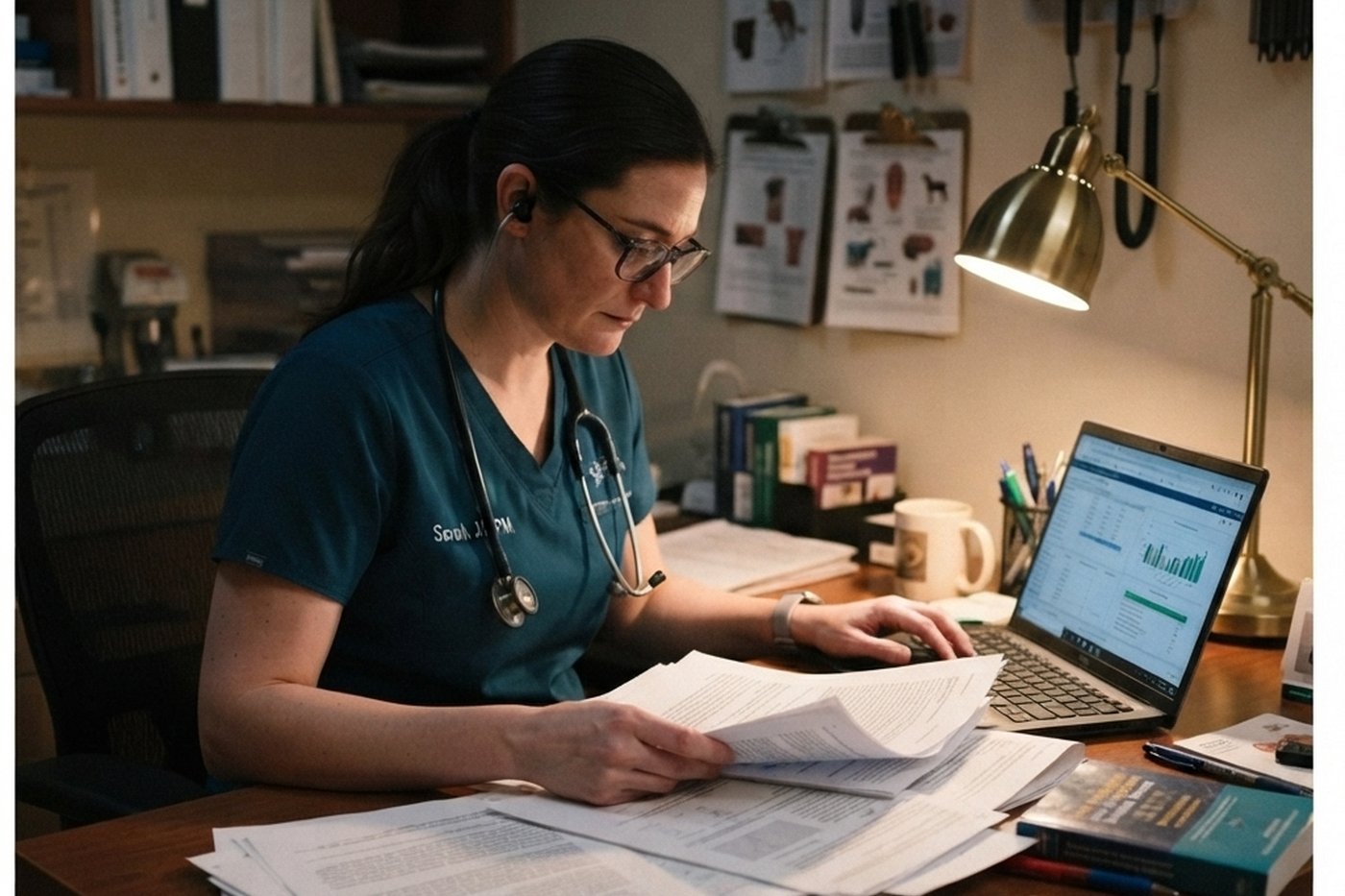
I spent three weeks reading everything I could find on the canine gut microbiome and stool formation.
The studies were there. They'd been there for years. I just hadn't been looking.
Dogs with chronic soft stool consistently showed gut dysbiosis: reduced microbial diversity, depleted beneficial bacteria, low levels of the compounds that regulate water in the colon. When researchers restored the gut bacteria in these dogs, stool quality normalized. Often within days, not months.
Not in all cases. Nothing works in all cases. But the numbers were significant enough that I couldn't ignore them.
The question was: what does effective gut restoration actually look like?
Because I'll tell you, most probiotics on the market are basically useless for this.
Single-strain products. Nothing to feed the new bacteria. Nothing to repair the gut wall. You're throwing a few bacteria into a depleted environment and hoping they survive. Most of them don't.
The research showed that meaningful gut restoration requires five things working together:
Probiotics . Two strains, Lactobacillus casei and Lactobacillus fermentum, 450 million CFU per serving. These are the workers that ferment fiber and set the water balance that forms a stool. Chronic soft stool means they're depleted. They have to be actively rebuilt.
Postbiotics . The beneficial compounds healthy bacteria produce. They help seal the gut wall and calm the low-grade irritation that keeps knocking new bacteria back down. This is the piece that makes the rebuild stick.
Prebiotics . The food the new bacteria need to establish and stay. Without a prebiotic, you can add all the probiotics you want. They'll wash out within weeks because there's nothing supporting them.
Immune support . Colostrum. Rich in immunoglobulins that support the immune system and help repair the gut lining, so the gut can hold its new balance instead of sliding back.
Stress cycle disruption . Cortisol works against gut balance through the gut-brain axis. Rescue dogs and anxious dogs, the very dogs with the worst chronic stools, carry the most stress. Ashwagandha is one of the few compounds with clinical evidence for reducing cortisol in dogs.
Five components. All five working together. I couldn't find a single product that combined them.
Then My Colleague Told Me What She'd Been Using
The vet who called me, the one with sixteen soft-stool dogs, had found exactly one formula that checked every box.
It's called Nira Pet.
I'll be honest. When she first mentioned it, my instinct was skepticism. I'm always skeptical of supplements. The pet supplement industry is largely unregulated, and most products don't contain what their labels claim.
But three things stood out about this one.
First, the formula matched the research exactly. It's the only 5-in-1 gut solution for dogs: two probiotic strains, a postbiotic, a prebiotic, colostrum, and ashwagandha. It wasn't a random collection of ingredients. It was the exact five-part protocol the studies supported.
Second, it's the first backed by 8 independent certifications. NSF. NASC quality seal. cGMP manufacturing. Independent lab verification of every batch. In an industry where most products have zero verification, that mattered to me. What's on the label is actually in the product.
Third - it costs about $27 a jar with the bundle. My soft-stool clients were spending $80-120 a bag on prescription food, month after month, for partial results. Even if this only worked for a portion of them, the risk-to-benefit ratio was obvious.
So I started recommending it. Cautiously. Only to my chronic cases, the dogs with months or years of soft stool behind them. The ones where I'd run out of good options.
What I've Seen in My Patients Over Six Months
I want to be careful here. I'm a vet, not a salesperson. So I'll give you the honest picture.
I've recommended Nira Pet to twenty-two dogs with chronic soft stool since I started. Here's what I've observed:
Days 1-5: This is the part that surprises owners most. The stool changes fast. The gurgling often quiets down first. Firmer, more formed stools begin to follow, though this is only the very start of the change, not the finish.
Weeks 1-2: Formed stools become the norm rather than the exception. Owners tell me they catch themselves still carrying the extra bags out of habit. Several have said the same thing: I didn't realize how much space this took up in my head until it stopped.
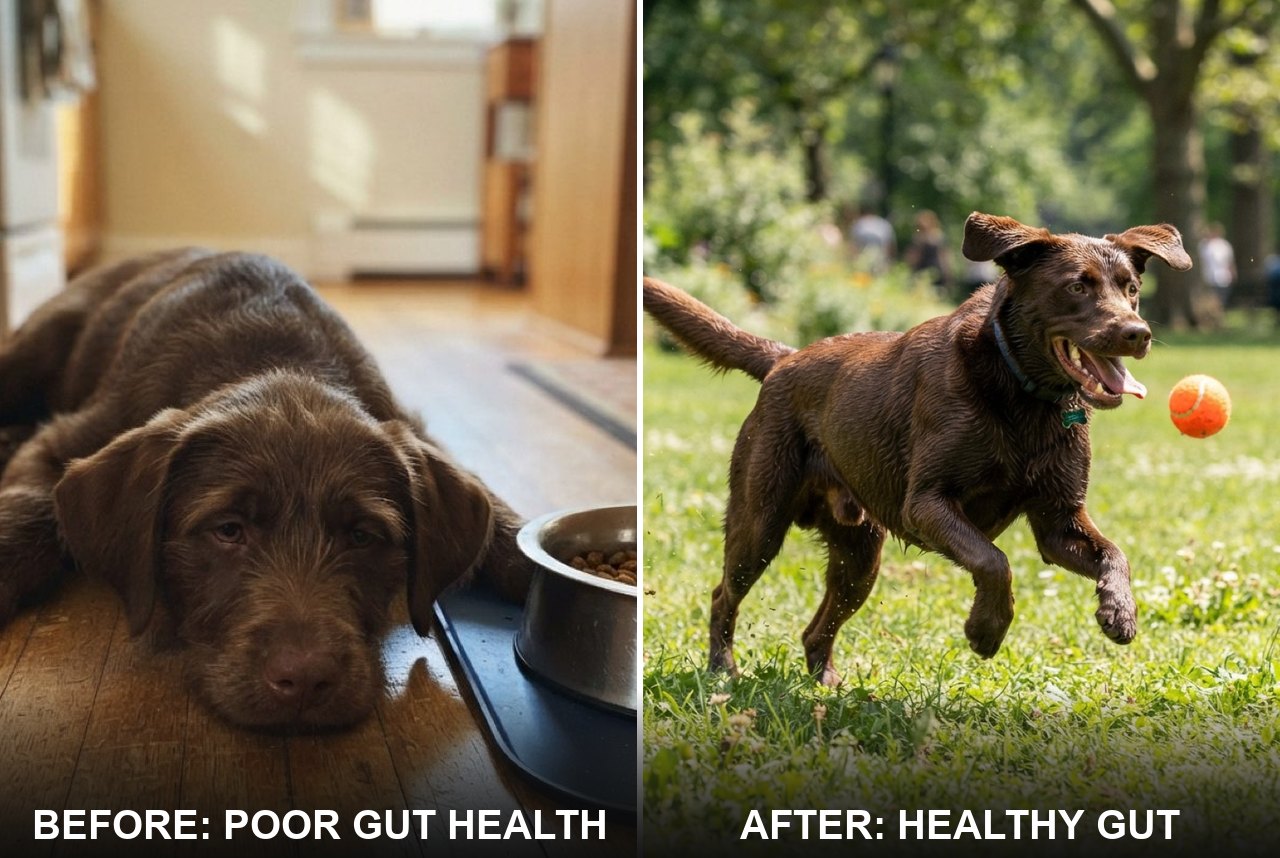
Weeks 3-6: This is where I've been genuinely surprised. Of my twenty-two chronic dogs, eighteen were having normal, formed stools every day by week four. Dogs with years of soft stool behind them. Treats came back. The gurgling stayed quiet.
Week 8 and beyond: The dogs who responded have stayed solid. No relapse. That's the part that's different from food switches. There's no honeymoon-then-slide, because we didn't change the input. We rebuilt the system that does the work.
I'm not going to pretend the numbers are perfect. Four of my twenty-two showed only partial improvement. That's real. Not every soft stool is gut-driven. Chronic diarrhea with weight loss, blood, or vomiting needs a real medical work-up first. I still run those.
But eighteen out of twenty-two chronic cases, most changing within the first week? That's a result I've never seen from any food change.
And the improvements weren't just the stools. Owners reported better energy, better appetite, shinier coats, quieter stomachs. When the gut recovers, everything downstream improves.
What Real Owners Have Told Me
I asked a few of my clients if they'd be willing to share their experience. Here's what they said:
GP
"Rex had loose stools for three years. I had accepted it as his normal. Day four it was firming. Day seven, formed for the first time. Three years of extra bags on walks and it took a week."
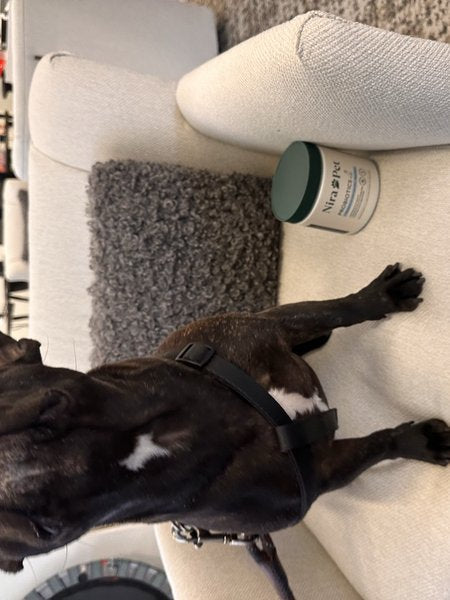
LD
Liam D.
"Before I even noticed the poop change, his stomach stopped gurgling. It used to make sounds several times a day. That stopped in week one. Poop firmed up by week two. Four months in, still solid."
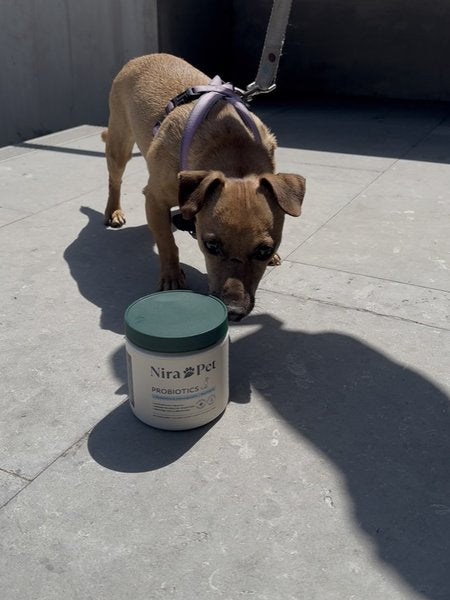
NC
Natasha C.
"I switched meats three times and spent a fortune on prescription food. Nothing fully worked. This worked in five days. I was so frustrated it was this simple and nobody told me."
These aren't unusual stories. I hear versions of them every week now.
Here's What I Think You Should Know
If your dog has had soft or unpredictable stools for months, or if every food switch gives you one good week and then the same soft slide, the problem probably isn't that you haven't found the right food yet.
The problem is almost certainly in their gut.
And you can keep rotating proteins and paying $80-120 a bag for prescription food, knowing the honeymoon week always ends the same way, while the system behind the symptom stays depleted another year.
Or you can try restoring the gut, the actual root cause.
That's not a sales pitch. That's just the math. And the science.
Nira Pet is currently running a Buy 2, Get 1 Free promotion.
That gives you enough to see the full rebuild through. The early signs come first, but the rebuild that makes a firm stool permanent takes the weeks after that, so give it the whole run.
They also offer a 30-day money-back guarantee. Full refund if your dog doesn't improve. No questions.
I've recommended this to twenty-two chronic soft-stool dogs in my practice. Eighteen have normal stools every day. I wish I'd known about this approach five years ago.
Tucker, the rescue Lab from that Friday afternoon? His owner texted me a photo on day five with one word: FORMED. I have never been happier to get a photo of poop. If I could go back and tell my patients' owners one thing, it would be this: your dog doesn't have a sensitive stomach. He has a depleted gut. And that's actually fixable.
How to Try It
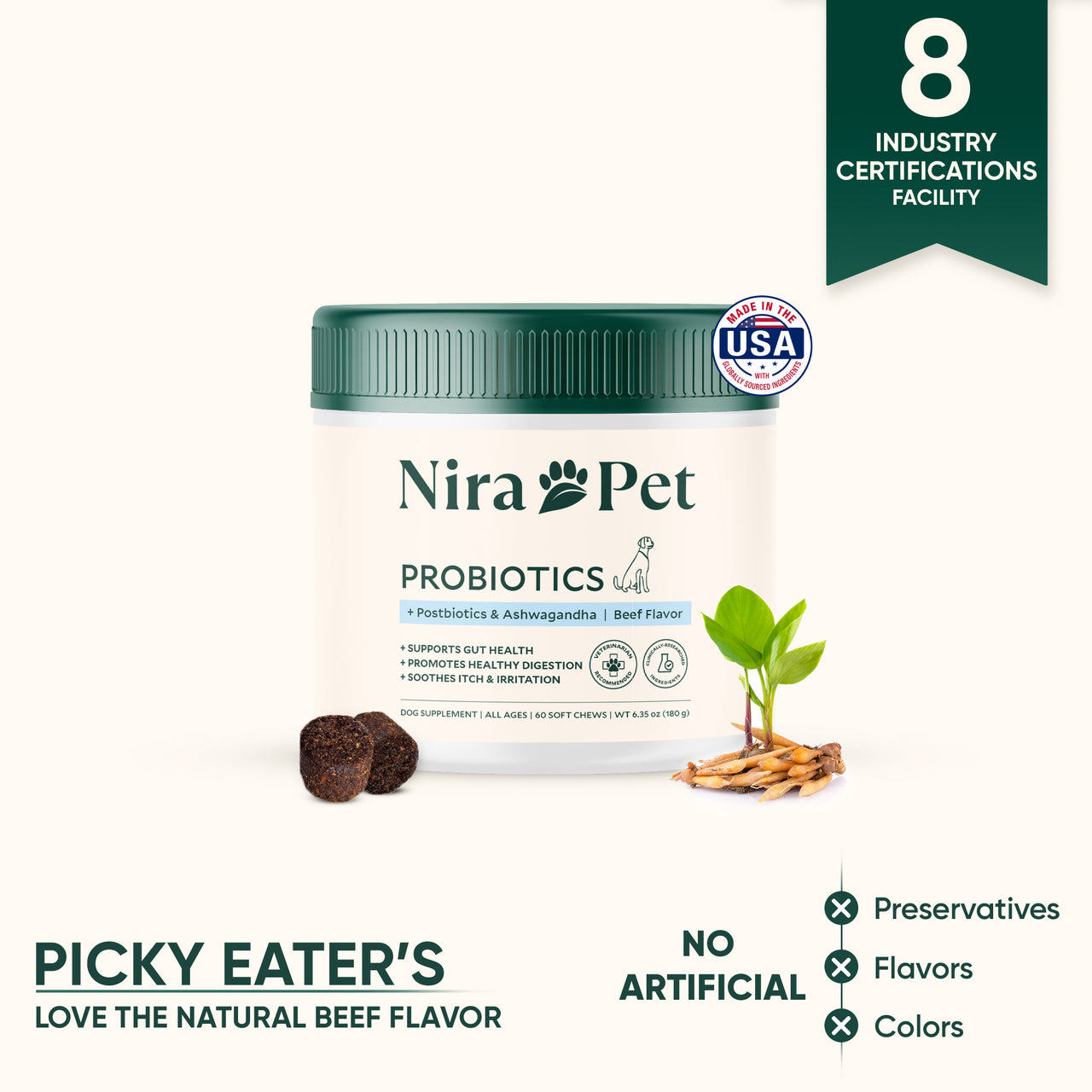
Nira Pet sells direct. No retail, no middlemen.
They prioritize quality over mass production, which means they sell out periodically. If the link above shows availability, inventory is current. If not, they typically restock within a few days.
Every jar is covered by the 30-day money-back guarantee. No questions, even if it comes back empty.
Recommended
4.8 | 2,656 Reviews
New 5-In-1 Gut Health Soft Chew
Prebiotics + Probiotics + Postbiotics
Colostrum and Ashwagandha
Beef-Flavored Soft Chews
USA Made. 8 Third-Party Certifications.
Check Availability