

GET UP TO 50% OFF + FREE SHIPPING

Home > Trending > Dog Health
I've Been a Vet for 16 Years. We've Been Treating Ear Infections Wrong This Entire Time.
Why the dogs on ear drops and antibiotics keep coming back - and what I finally started recommending instead.
As Seen On






July 2nd, 2026 | 9:40 am EST
Dr. Laura Bennett, DVM

There are certain dogs I'll never forget.
One was a six-year-old Cocker Spaniel named Murphy. His owner brought him in on a Thursday morning.
She knew why they were there before I even looked. So did I. The sweet, musty smell you can catch from across the room. The head shaking that had kept her up since 2am. The dark wax she kept wiping away, coming right back.
She sat in my exam room crying.
"I've done everything you told me to do," she said. "The drops. The antibiotics. The cleanings every week. The new food. And we're right back here again."
I looked at Murphy's chart. His fifth ear infection in fourteen months. Over $1,100 in visits and medications. And the infections were coming faster, not slower.
I didn't have a good answer for her. Not that day.
But Murphy is the reason I started questioning everything I was trained to believe about ear infections.
If your dog is caught in this cycle, you know this scene from the other side of my exam table. You know the sweet, musty smell that reaches you before you even lift the ear. You've held a phone flashlight over that red, waxy canal at midnight, hoping you were wrong.
You've been up at 2am with the head shaking and the tags rattling. And you already know what the vet will say tomorrow, because it's exactly what she said last time.
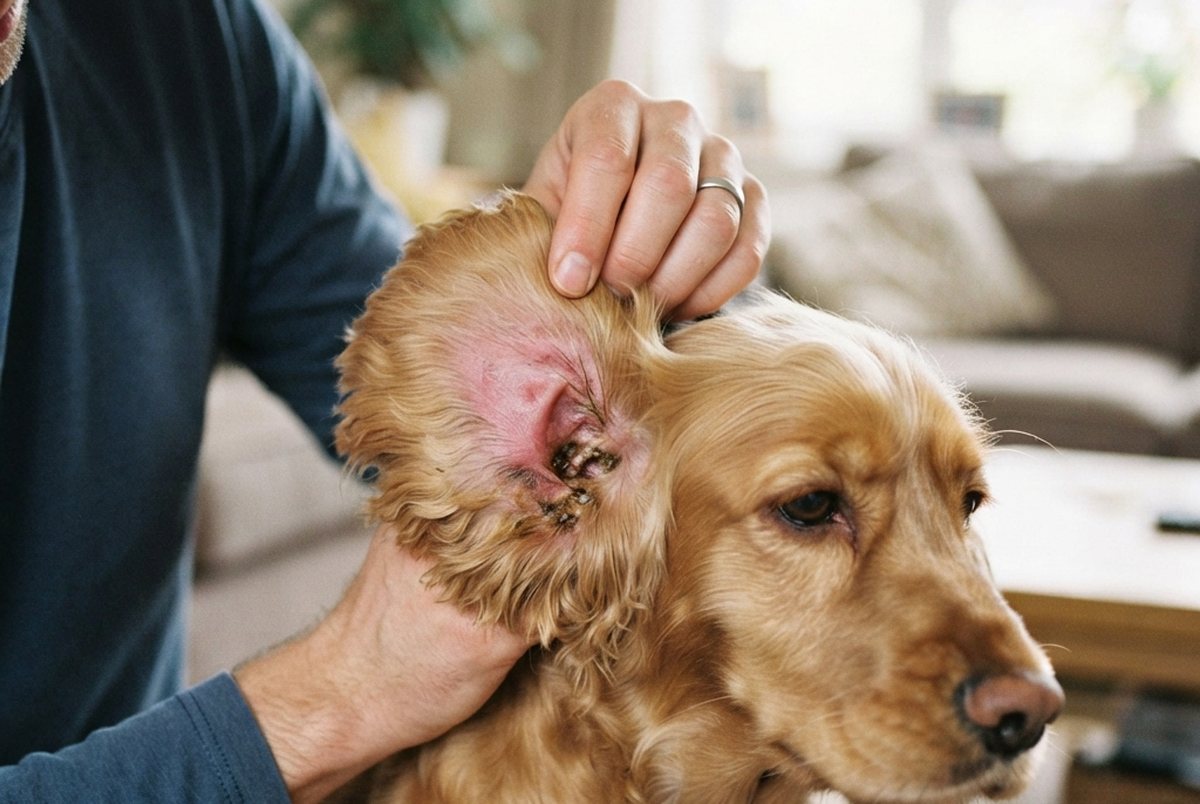
Here's What Vet School Taught Me About Ear Infections
Dog shaking his head? Look in the ear, find yeast. Prescribe drops.
Infection comes back? Stronger drops. Add oral antibiotics.
Coming back faster? Run a culture. Change the food.
Still coming back? Dermatologist referral. Allergy work-up. And the line we were all taught: some breeds are just prone to ear infections.
That's the playbook. I followed it for fifteen years.
And I watched the same thing happen over and over: the drops clear the ear, the ear stays clean for a few weeks, and then the smell comes back. A cycle that never actually ends. It just gets more expensive.
I want to be honest about something. For most of my career, I accepted this. "Floppy ears trap moisture. It's the breed. We'll manage it." That's what we're taught. The goal isn't to cure it. The goal is to manage it.
But about two years ago, I started keeping informal notes on my repeat ear cases. Just tracking outcomes. And the pattern was hard to ignore.
Dogs treated with prescription drops? Nearly all of them cleared up within two weeks. Good. That's what you want to see.
But the infections kept returning. And the gaps between them were shrinking. A dog that used to flare every six weeks started flaring every four. Then every three.
And I knew where the worst cases end. Years of infection slowly thicken and scar the ear canal until it narrows shut, and no drop can reach the infection anymore. By then the dog is in constant pain, tilting its head, flinching away when you reach for it, worn down by an ache that never lets up.
The only fix left at that point is a surgery called a total ear canal ablation. A surgeon cuts the entire ear canal out. It runs three to six thousand dollars, often more, and it is not a clean trade. Weeks of a hard recovery, drains and a cone, a real risk of facial nerve damage that leaves the face drooping, and a dog that is deaf in that ear for the rest of its life.
I have had to walk owners through that surgery. Every single time, I think back to the first visit, years earlier, when it was one ear that kept coming back and someone told them it was just the breed. This is where that sentence can quietly end up. It does not have to.
And long before surgery is ever on the table, the toll is already being paid daily. An ear that always aches is a dog that flinches from your hand, sleeps badly, and snaps when it never used to. The same imbalance driving the infection does not stay in the ear either, and slowly the bright, easy dog you brought home stops being himself. Those are the quiet years lost to a problem everyone kept treating and no one kept solving.
I'm not saying every dog ends up there. Most don't. But I can say that clearing the same ear five times without asking why it keeps refilling isn't something any of us went to vet school feeling great about.
The drops aren't the problem, exactly. The problem is what we're NOT doing while we prescribe them.
We're not asking why the yeast keeps coming back in the first place.

The Phone Call That Changed How I Practice
Six months ago, a vet I went to school with, someone I trust, someone who's as skeptical about supplements as I am, called me about a patient she'd been struggling with. A chronic ear dog.
Seven infections in two years. She'd tried everything.
Then she said something I wasn't expecting.
"I stopped treating his ears entirely. I put him on a gut restoration protocol. He hasn't had an ear infection since."
I almost laughed. Gut health? For ears? That sounded like something you'd read on a wellness blog. Not something a board-certified vet would recommend.
But she was serious. And she wasn't talking about one dog.
"Laura, I've done this with eleven chronic ear dogs now. Nine of them haven't had a single infection since. The other two went from flaring monthly to twice a year. I'm not exaggerating."
She sent me the research she'd been reading. And I need to tell you what I found, because it changed how I think about every ear case that walks into my clinic.
The Yeast in Your Dog's Ear Doesn't Come From the Ear
I know that sounds strange. But it's well-established microbiology.
The yeast behind most recurring ear infections lives in your dog's body all the time, in small amounts. That's normal. In a healthy dog, the good bacteria in the gut keep it penned in. They crowd it out so it has no room and no food. They keep the gut an environment yeast hates. And they keep the gut wall sealed so yeast can't slip into the bloodstream and travel.
But when the gut microbiome is disrupted, when beneficial bacteria die off, all three of those defenses fall at once. The yeast grows, spreads through the body, and looks for somewhere warm, damp, and dark to settle.
In a floppy-eared dog, the ear canal is the perfect home.
Here's what happens next: you treat the ear. The drops kill the yeast sitting in the canal. But the supply inside the body is untouched. A few weeks later, the ear fills right back up from the same source.
That's the pattern you know by heart. The smell. The head shaking. The dark wax. On a clock.
It looks exactly like a stubborn ear problem. Every symptom points at the ear.
But the ear isn't the cause. The gut is.
And here's the part that made me sit back in my chair:
Antibiotics, the thing we reach for when the infection is bad, kill bacteria everywhere. Including the good bacteria in the gut. The exact ones keeping the yeast penned in.
So every course of antibiotics leaves the gut weaker than it was before.
The yeast has less holding it back. The next infection comes faster. That's why the gaps in my notes kept shrinking. Each round of treatment was quietly setting up the next one.
We weren't failing because we had the wrong drops. We were failing because we were treating a symptom as if it were the disease.
Why Everything Else Fails Too
Once I understood the gut connection, every failed treatment in my career suddenly made sense.
Prescription ear drops. They kill the yeast in the ear canal, and only there. Surface treatment for a supply problem. The relief is real. And it's temporary, every single time, because the source keeps producing.
Oral antibiotics. Necessary when the infection is severe. But they wipe out the gut bacteria that keep yeast in check, so the gut comes out of every course weaker than it went in. Nobody was rebuilding what they wiped out.
Grain-free and limited-ingredient diets. Food changes what the good bacteria eat. It can't bring back bacteria that are already gone. That's why the diet switch helped a little, or not at all.
Weekly ear cleaning. You can't clean your way out of a supply problem that starts inside. The wax and the moisture are the symptom, not the source.
I'd been prescribing all of these for years. Confidently. Because that's what I was trained to do.
But looking at it through the gut lens, we were just wiping away the smoke while the fire kept burning.
So I Did What I Always Do. I Went to the Research.

I spent three weeks reading everything I could find on the canine gut microbiome and yeast overgrowth.
The studies were there. They'd been there for years. I just hadn't been looking.
Dogs with recurring ear infections consistently showed gut dysbiosis: reduced microbial diversity, depleted beneficial bacteria, compromised gut barrier function. When researchers restored gut health in these dogs, yeast populations came back under control. The flare-ups slowed. In many dogs, they stopped.
Not in all cases. Nothing works in all cases. But the numbers were significant enough that I couldn't ignore them.
The question was: what does effective gut restoration actually look like?
Because I'll tell you, most probiotics on the market are basically useless for this.
Single-strain products. Nothing to feed the new bacteria. Nothing to repair the gut wall. You're throwing a few bacteria into a damaged environment and hoping they survive. Most of them don't.
The research showed that meaningful gut restoration requires five things working together:
Probiotics . Two strains, Lactobacillus casei and Lactobacillus fermentum, 450 million CFU per serving, that crowd the yeast out and take back its room and its food supply. They're also the exact bacteria antibiotics wipe out, which is why they have to be actively rebuilt, not just waited on.
Postbiotics . The beneficial compounds that healthy bacteria produce. They help seal the gut wall, closing the route the yeast uses to slip into the bloodstream and spread. This is the piece that cuts the supply line.
Prebiotics . The food the new bacteria need to establish and stay. Without a prebiotic, you can add all the probiotics you want. They'll die off within weeks because there's nothing supporting them.
Immune support . Colostrum. Rich in immunoglobulins that support the immune system and help repair the gut lining, so the body can hold the line once balance is restored. This is the piece most products miss entirely.
Stress cycle disruption . Cortisol directly damages gut health through the gut-brain axis. A dog that's constantly uncomfortable is constantly stressed, which weakens the gut further, which frees up more yeast. You have to break that cycle. Ashwagandha is one of the few compounds with clinical evidence for reducing cortisol in dogs.
Five components. All five working together. I couldn't find a single product that combined them.
Then My Colleague Told Me What She'd Been Using
The vet who called me, the one with eleven chronic ear dogs, had found exactly one formula that checked every box.
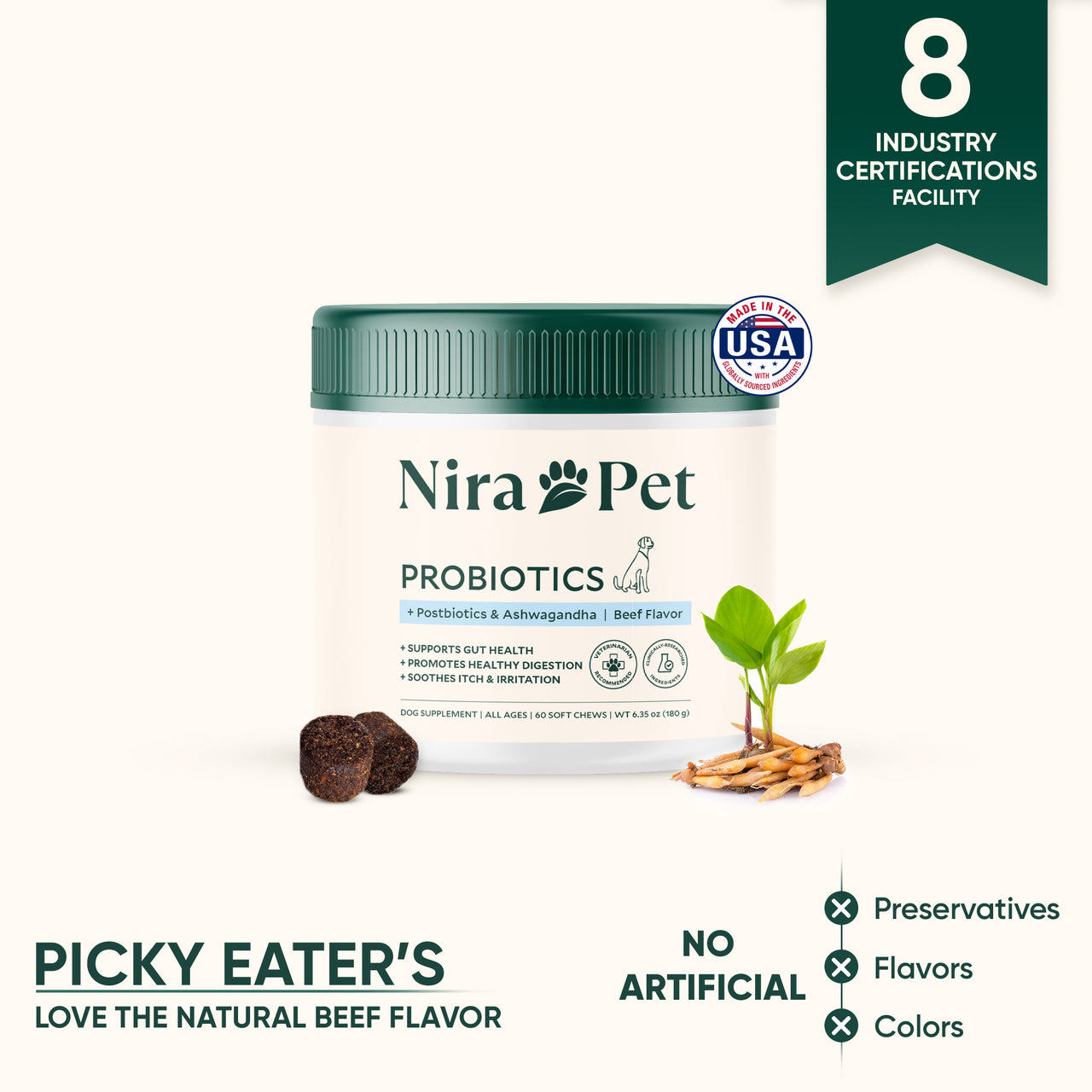
It's called Nira Pet.
I'll be honest. When she first mentioned it, my instinct was skepticism. I'm always skeptical of supplements. The pet supplement industry is largely unregulated, and most products don't contain what their labels claim.
But three things stood out about this one.
First, the formula matched the research exactly. It's the only 5-in-1 gut solution for dogs: two probiotic strains, a postbiotic, a prebiotic, colostrum, and ashwagandha. It wasn't a random collection of ingredients. It was the exact five-part protocol the studies supported.
Second, it's the first backed by 8 independent certifications. NSF. NASC quality seal. cGMP manufacturing. Independent lab verification of every batch. In an industry where most products have zero verification, that mattered to me. What's on the label is actually in the product.
Third - it costs about $27 a jar with the bundle. My chronic ear patients were spending $150-300 per infection, several times a year. Even if this only worked for a portion of them, the risk-to-benefit ratio was obvious.
So I started recommending it. Cautiously. Only to my chronic cases, the dogs on their third or fourth ear infection in a year. The ones where I'd run out of good options.
What I've Seen in My Patients Over Six Months
I want to be careful here. I'm a vet, not a salesperson. So I'll give you the honest picture.
I've recommended Nira Pet to nineteen dogs with recurring ear infections since I started. Here's what I've observed:
Weeks 1-2: Most owners report improved digestion first. Firmer stools, less gas. The gut is responding before the ears do. I tell every owner: don't expect the ear pattern to change in week one. The bacteria need time to establish. Keep treating any active infection with your vet.
Weeks 3-6: This is typically when the phone calls start. The smell fades between flare-ups. Owners tell me they lean in for the check they've done a hundred times, and it's just not there. The scheduled flare-up arrives late. Or doesn't arrive.
Weeks 6-10: This is where I've been genuinely surprised. Of my nineteen chronic ear dogs, fourteen went past their usual flare-up window and kept going. A dog that flared every five weeks going nine, ten, twelve weeks clean. The gaps don't just stretch. For most dogs, they stop closing.
Month 3 and beyond: The dogs who responded have stayed clear. No relapse. That's the part that's different from drops. When you stop drops, the ear refills within weeks. These dogs aren't being treated anymore. The system that keeps yeast in check is just working again.
I'm not going to pretend the numbers are perfect. Five of my nineteen showed little change. That's real. Not every ear case is gut-driven. Some ears are anatomy problems, foreign bodies, or true food allergies that need a different work-up. I still prescribe drops when a dog needs them.
But fourteen out of nineteen chronic cases breaking a cycle that had run for years? That's a result I've never seen from anything in the playbook.
And the improvements weren't just the ears. Owners reported firmer stools, better energy, less paw licking, shinier coats. When the gut recovers, everything downstream improves.
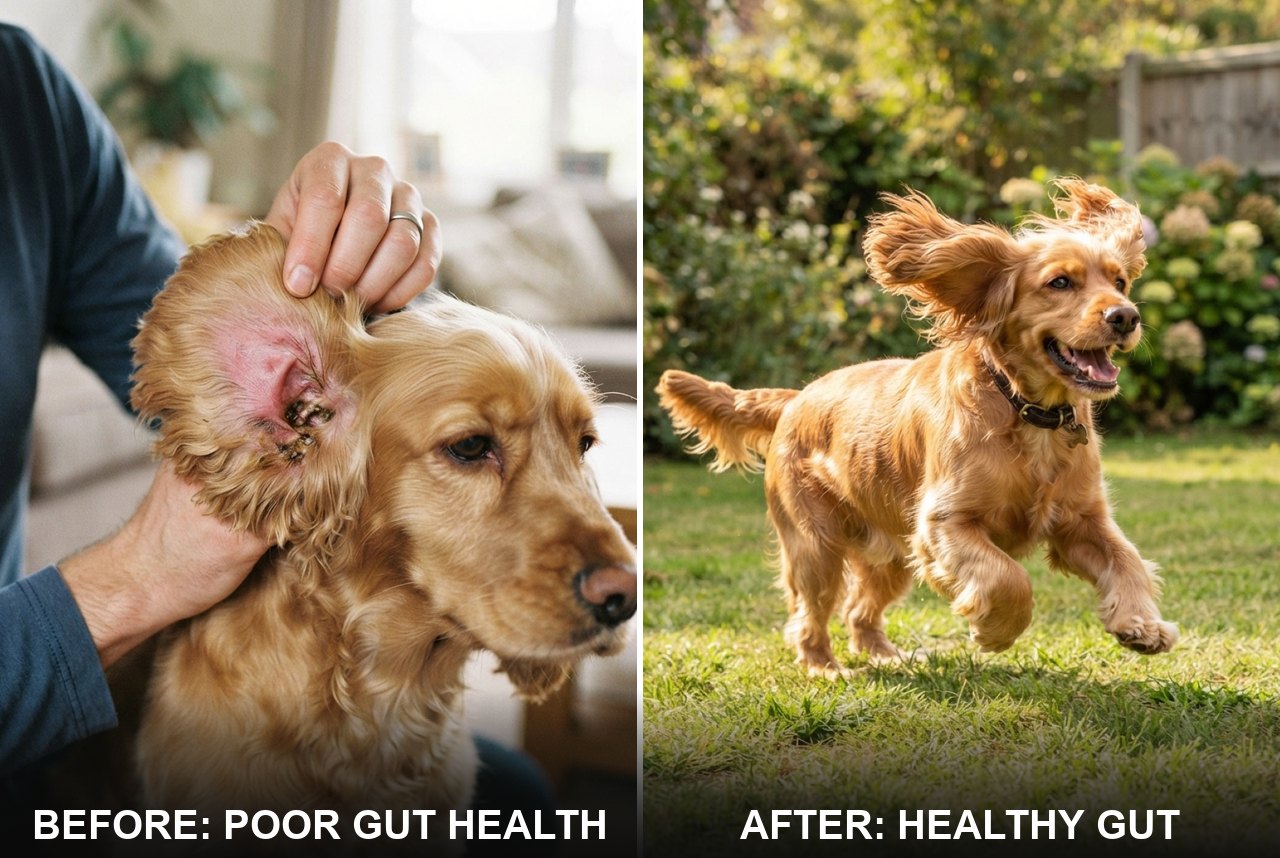
What Real Owners Have Told Me
I asked a few of my clients if they'd be willing to share their experience. Here's what they said:
"My cocker spaniel flared every 6 weeks. I treated her with drops eight times in 18 months. Started Nira Pet in October. Nothing since. Six months. I didn't know the cycle was something you could actually break."
CR
Carlo R.
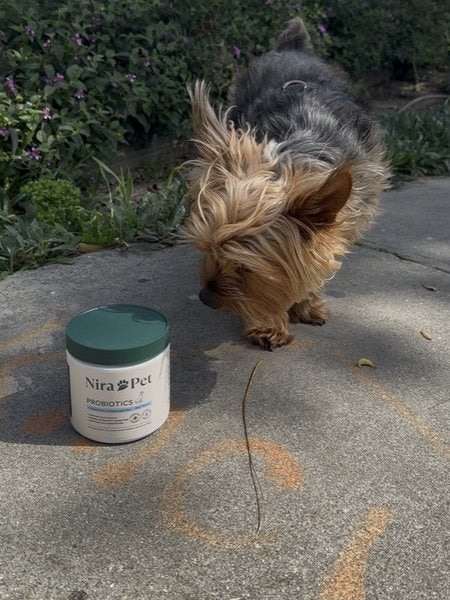
"Anyone with a yeasty-eared dog knows the smell. You walk in the room and you just know. I noticed it less within the first month. By month two it was gone. No drops, no vet, no infection in four months."
AL
Amy L.
"I finally asked my vet why the infections kept coming back. She said it was the breed. I tried the chew anyway and the infections stopped. Three months clean. I tell every floppy-eared dog owner I meet."
These aren't unusual stories. I hear versions of them every week now.
Here's What I Think You Should Know
If your dog has had three or more ear infections in the past year, or if the infections are coming faster and faster, the problem probably isn't that you need stronger drops.
The problem is almost certainly in their gut.
But understand what a recurring ear infection is really telling you. The gut that is supposed to keep yeast in check has lost control, and that same gut is where most of your dog's immune system lives.
Left unfixed, the imbalance does not stay in the ear. It feeds the skin infections, the hot spots, the digestive trouble, and a slow erosion of the defenses that keep your dog well.
The worst cases I have seen are dogs so worn down by years of it, on so many rounds of medication, that the family ends up in my office asking whether the kindest thing left is to let him go. That is the far end of a road that starts with one ear that keeps coming back.
And you can keep paying $150-300 to end each infection, knowing the ear will start refilling the moment the drops stop.
Or you can try restoring the gut, the actual root cause.
That's not a sales pitch. That's just the math. And the science.
Nira Pet is currently running a Buy 2, Get 1 Free promotion.
That gives you enough to see the full gut restoration through, the way the research says it should be done.
They also offer a 30-day money-back guarantee. Full refund if your dog doesn't improve. No questions.
I've recommended this to nineteen chronic ear dogs in my practice. Fourteen have broken the cycle. I wish I'd known about this approach five years ago.
Murphy, the cocker spaniel from that Thursday morning? Eight months now. His owner told me she still lifts his ear every week out of habit. She keeps finding nothing. If I could go back and tell my patients' owners one thing, it would be this: your dog's ears aren't broken. Their gut is. And that's actually fixable.
How to Try It
Nira Pet sells direct. No retail, no middlemen.
They prioritize quality over mass production, which means they sell out periodically. If the link above shows availability, inventory is current. If not, they typically restock within a few days.
Every jar is covered by the 30-day money-back guarantee. No questions, even if it comes back empty.
Recommended
4.8 | 2,656 Reviews
New 5-In-1 Gut Health Soft Chew
Prebiotics + Probiotics + Postbiotics
Colostrum and Ashwagandha
Beef-Flavored Soft Chews
USA Made. 8 Third-Party Certifications.
Check Availability