

GET UP TO 50% OFF + FREE SHIPPING

Home > Trending > Dog Health
I've Been a Vet for 12 Years. The Diarrhea After Antibiotics Is the Illness We Cause and Never Treat.
Why dogs finish their antibiotics and end up with a wrecked gut - and the recovery step your vet probably never mentioned.
As Seen On






July 5th, 2026 | 7:50 am EST
Dr. Rachel Kim, DVM

There are certain dogs I'll never forget.
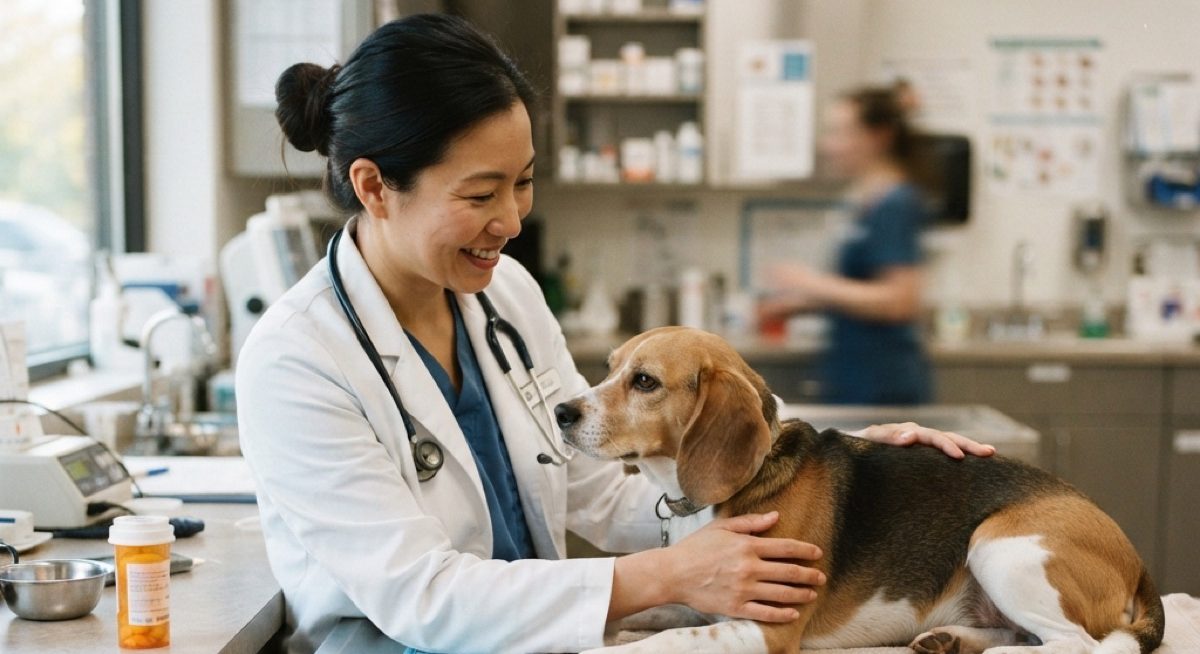
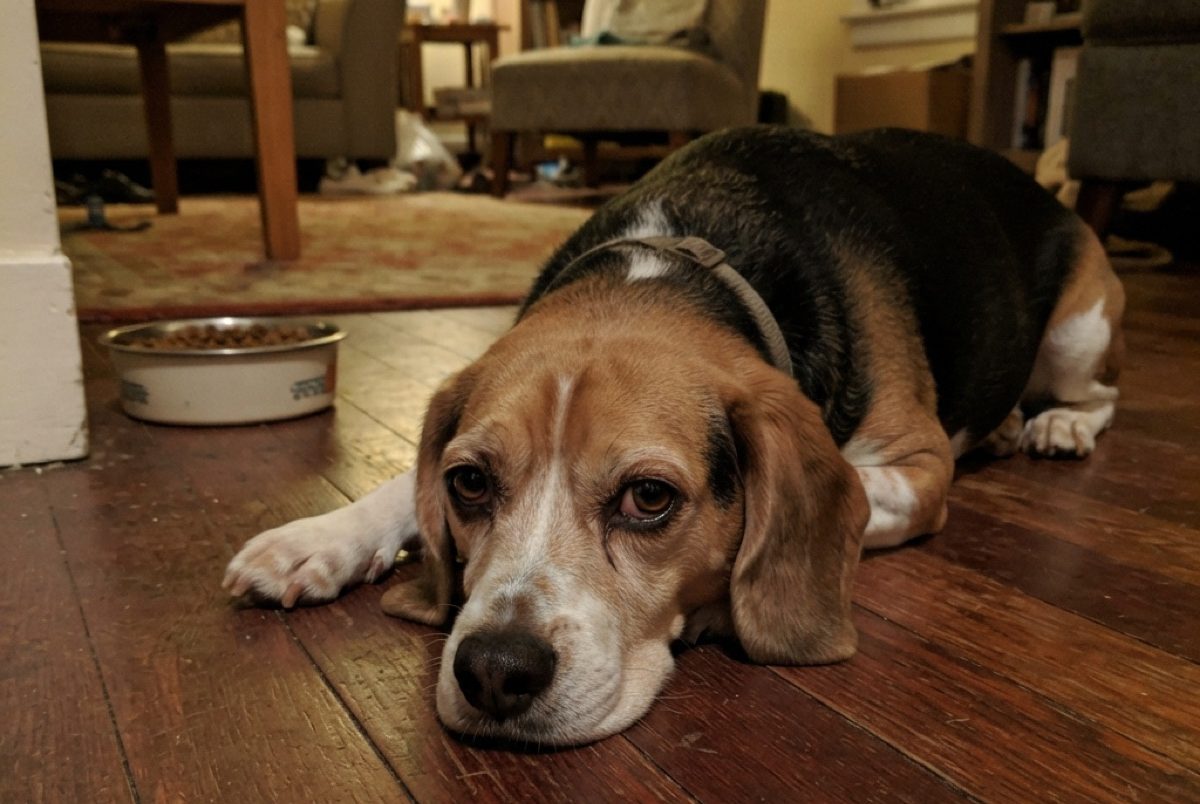
One was a three-year-old Beagle named Bella. Her owner called me on a Monday, five days after Bella finished the antibiotics I prescribed.
Bella had sailed through her skin infection. The antibiotics did their job. Then, two days after the last pill, the diarrhea started. Urgent, watery, four times a day. Her owner was up at 3am scrubbing the carpet, wondering what she had done wrong.
She wasn't crying. She was exhausted. And she asked me a question that stopped me.
"We just fixed one thing," she said. "Why is she sick again? Is the infection back?"
It wasn't the infection. It was the treatment. The antibiotics I prescribed had cleared the bacteria causing her skin infection, and along with them, a huge share of the good bacteria running her gut.
And here's the part I'm not proud of: I knew that would probably happen. And I sent her home without a plan for it.
Bella is the reason I changed how I prescribe antibiotics. Every course, for every dog.
If you're living this right now, I don't have to describe it. You're sleeping with one ear open for the whine at the door, and some nights you don't make it in time. The paper towels and the enzyme spray have moved onto the kitchen counter for good.
You watch every squat in the yard like a hawk. And under it all sits the question that stings the most: she just got better. Why is she sick again?
Here's What Every Vet Knows and Few Say Out Loud
Antibiotics can't tell good bacteria from bad. They clear both.
The infection dies. So do dozens of kinds of good gut bacteria.
The gut loses the workers that control digestion and water balance.
And a few days later, the diarrhea starts. Right on schedule.
That's not a side effect going wrong. That's the medicine working exactly as designed.
I watched it over and over: the dog beats the infection, the owner celebrates, and three days later they're calling me about liquid stools at 3am. We'd treat the new symptom with a bland diet and wait it out. Sometimes a week. Sometimes longer.
I want to be honest about something. For most of my career, I accepted this. "Give some chicken and rice, it'll pass." That's what we're taught. Ride it out.
But about two years ago, I started keeping informal notes on my post-antibiotic cases. Just tracking outcomes. And the pattern was hard to ignore.
Most dogs' diarrhea did settle within a week or two. Good. That's what you'd expect.
But settling isn't recovering. A worrying share of those dogs came back weeks later with soft stools, new skin flare-ups, or another infection. Their guts had never actually been rebuilt. Just quieted.
And some dogs got stuck in a loop you may recognize: infection, antibiotics, gut damage, weaker defenses, another infection, more antibiotics. Each round digging the hole a little deeper.
I'm not saying antibiotics are wrong. They save lives, and when your dog needs them, your dog needs them. But sending a dog home with a bulldozed gut and a bag of rice isn't something any of us went to vet school feeling great about.
The antibiotics aren't the problem, exactly. The problem is what we're NOT doing after we prescribe them.
We're not rebuilding what we knocked down.
And here is the part that should worry you. Your dog's gut takes in a constant stream of bacteria, yeast, and junk every single day, from food, from water, from the ground, from everything it licks. The one thing that keeps all of it in check is a wall of good bacteria. Antibiotics do not dent that wall. They level it. And a gut with nothing good left standing has no defense against any of what pours in next. Yeast overgrows. Harmful bacteria bloom unchecked. The immune system that lives in the gut goes quiet at the exact moment your dog needs it most.
That is why it is so often not just diarrhea. It becomes a yeasty skin or ear flare-up, a loss of appetite, vomiting, or a new infection that needs another course of antibiotics, and a dog who gets a little weaker and a little more fragile each time.
The worst cases spiral, one complication feeding the next, until a dog who came in for a simple infection is the sickest it has ever been.
And every one of those rounds asks the body to pay. Repeated antibiotics and the inflammation that follows lean hardest on the organs doing the cleanup, and the bills climb with them: the re-checks, the skin and ear treatments, the workups for a dog who is sick in a new way every few weeks. Somewhere in there the dog changes. Less spark, less appetite, quicker to tire. Not the dog you dropped off for a simple infection, but a more fragile version the antibiotics were never going to rebuild.
Rebuilding the gut fast is how you keep a routine antibiotic course from turning into that.

The Phone Call That Changed How I Practice
Around that time, a vet I went to school with, someone I trust, someone who's as skeptical about supplements as I am, told me she had changed her discharge protocol. Every antibiotic course now goes home with a gut rebuild plan.
Not the standard single-strain packet. A full protocol.
Then she said something I wasn't expecting.
"Since I started, the post-antibiotic diarrhea calls have almost disappeared. And the repeat infections have dropped too."
I'll admit I pushed back. We already hand out probiotics. Every clinic does. That's supposed to be the answer.
But she was serious. And she had the numbers to back it up.
"Rachel, the standard packet is one kind of bacteria. The course just wiped out dozens. One strain can't rebuild an ecosystem. That's why these dogs stay fragile for weeks."
She sent me the research she'd been reading. And I need to tell you what I found, because it changed what goes home with every antibiotic course I prescribe.
The Gut Doesn't Fully Recover On Its Own. That's the Part Nobody Plans For
I know waiting it out feels reasonable. Here's what's actually happening inside.
Your dog's gut runs on dozens of kinds of good bacteria. They finish digestion, control how much water stays in the stool, keep yeast and bad bacteria crowded out, and train the immune system. A single antibiotic course can knock those populations down dramatically.
With the workers gone, the water balance fails. That's the diarrhea. It isn't a new illness or a bad reaction. It's a gut trying to run with most of its staff missing.
Left alone, some bacteria grow back. But not all of them, not evenly, and not quickly. Research on gut recovery keeps finding the same uncomfortable thing: some bacterial groups stay depressed for months, and some never fully return on their own.
Here's what happens next: the diarrhea eventually settles, everyone relaxes, and the gut quietly stays incomplete. Research on gut recovery shows the microbiome can stay measurably disrupted for weeks to months after a course ends.
That gap is where the trouble lives. Soft stools that come and go. New skin flare-ups. Another infection a month later. Another course of antibiotics, and a gut that starts the next round one hole deeper.
It looks like bad luck. Like your dog is just fragile.
But it isn't bad luck. It's an unfinished recovery.
And here's the part that made me sit back in my chair:
The standard probiotic packet handed out at most clinics contains exactly one kind of bacteria. One. The antibiotic course just cleared dozens.
One strain cannot restaff an entire gut. It was never designed to.
So the dog seems better for a few weeks, then slides back. Not because probiotics don't work. Because a one-strain patch was sent to do an ecosystem's job.
We weren't failing because we treated the infection. We were failing because we treated the infection and walked away from the gut.
Why the Usual Advice Falls Short
Once I understood the recovery gap, the standard advice suddenly looked very thin.
Chicken and rice. Easy to digest, buys the gut some rest. Do it. But rest is not a rebuild. If the stool firms up on bland food and turns soft the moment normal food returns, the bacteria still aren't back.
Pumpkin. Fiber soaks up water and firms the stool for a day. A sponge, not a repair. It brings back exactly zero bacteria.
The standard probiotic packet. One strain. Useful for calming an acute episode, and I still use it for that. But it cannot rebuild dozens of lost kinds of bacteria, and it comes with nothing to feed them and nothing to repair the gut wall.
Waiting it out. The symptom fades. The damage doesn't. This is the advice I regret giving the most.
I'd given all of this advice for years. Confidently. Because that's what I was trained to do.
But looking at it through the recovery lens, we were mopping the floor and never fixing the pipe.
So I Did What I Always Do. I Went to the Research.

I spent three weeks reading everything I could find on gut recovery after antibiotics.
The studies were there. They'd been there for years. I just hadn't been looking.
The findings were consistent: after a course, dogs showed sharply reduced microbial diversity and a compromised gut barrier. Dogs given multi-strain restoration with prebiotic support recovered faster and more completely than dogs left to rebound on their own.
Not in all cases. Nothing works in all cases. But the numbers were significant enough that I couldn't ignore them.
The question was: what does effective gut restoration actually look like?
Because I'll tell you, the standard single-strain packet was never built for this job.
Single-strain products. Nothing to feed the new bacteria. Nothing to repair the gut wall. You're dropping a few bacteria into a bulldozed environment and hoping they survive. Most of them don't.
The research showed that meaningful gut restoration requires five things working together:
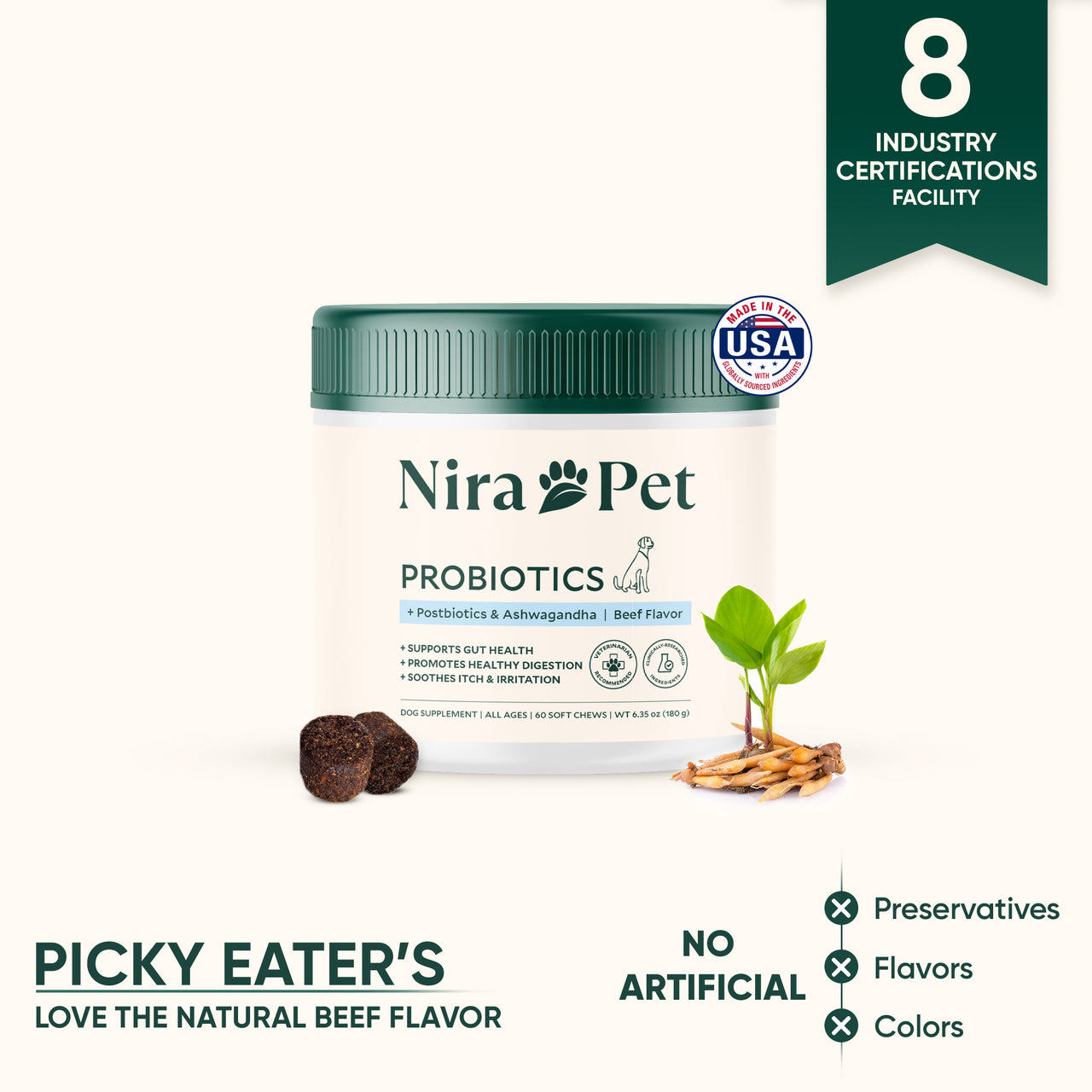
Probiotics . Two strains, Lactobacillus casei and Lactobacillus fermentum, 450 million CFU per serving. Multi-point restoration instead of a one-strain patch. They start restaffing the gut from the first dose.
Postbiotics . The beneficial compounds healthy bacteria produce. They help repair the gut wall the antibiotics left raw. This is the difference between a recovery that holds and one that slides back a few weeks later.
Prebiotics . The food the new bacteria need to establish and stay. A gut that just lost its populations has nothing ready to feed the replacements. Without this, the new bacteria wash out.
Immune support . Colostrum. Rich in immunoglobulins that support an immune system that just fought an infection and lost its gut-based training ground in the process.
Stress cycle disruption . Cortisol works against gut recovery through the gut-brain axis. A dog that just went through illness, surgery, or two weeks in a cone has stress to spare. Ashwagandha is one of the few compounds with clinical evidence for reducing cortisol in dogs.
Five components. All five working together. I couldn't find a single product that combined them.
Then My Colleague Told Me What She'd Been Using
My colleague, the one whose diarrhea callbacks disappeared, had found exactly one formula that checked every box.
It's called Nira Pet.
I'll be honest. When she first mentioned it, my instinct was skepticism. I'm always skeptical of supplements. The pet supplement industry is largely unregulated, and most products don't contain what their labels claim.
But three things stood out about this one.
First, the formula matched the research exactly. It's the only 5-in-1 gut solution for dogs: two probiotic strains, a postbiotic, a prebiotic, colostrum, and ashwagandha. It wasn't a random collection of ingredients. It was the exact five-part protocol the studies supported.
Second, it's the first backed by 8 independent certifications. NSF. NASC quality seal. cGMP manufacturing. Independent lab verification of every batch. For something you give a dog whose gut is already down, that mattered to me. What's on the label is actually in the product, and the bacteria are verified alive.
Third - it costs about $27 a jar with the bundle. One more urgent visit for unresolved diarrhea costs five times that. Even as pure insurance for the recovery, the math was obvious.
So I changed my discharge protocol. Every antibiotic course I prescribe now goes home with a gut rebuild plan. And for owners whose dogs are already in the middle of the diarrhea, we start the same day.
What I've Seen Since I Changed My Protocol
I want to be careful here. I'm a vet, not a salesperson. So I'll give you the honest picture.
I've tracked twenty-six dogs through post-antibiotic recovery on Nira Pet so far. Here's what I've observed:
Days 1-3: For dogs already in the diarrhea, this is where it starts to turn. The loose stools begin to settle over the first several days, though the gut underneath is still weeks from rebuilt. If your dog is still mid-course on antibiotics, give the chews about two hours apart from the medication. Starting during the course protects the gut from losing more ground.
Days 4-7: Formed stools return for most dogs. The 3am trips outside stop. Owners tell me the dog is suddenly, visibly themselves again: appetite back, energy back.
Weeks 2-4: This is the part nobody sees but matters most. The stool looks normal by week one, but the ecosystem underneath is still rebuilding. The dogs who stay on through week four are the ones who don't end up back in my exam room a month later.
Beyond: Of my twenty-six, twenty-three recovered fully with no relapse and no follow-up visit. That loop I mentioned, infection to antibiotics to weaker gut to new infection? Rebuilding the gut is how a dog steps off it.
I'm not going to pretend the numbers are perfect. Three of my twenty-six needed a second look. That's real. Diarrhea that lasts beyond a few days, has blood in it, or comes with vomiting or lethargy needs your vet, not a supplement. Always.
But twenty-three of twenty-six recovering fully, most with firm stools inside a week? Before this, my honest answer was ride it out and hope.
And the improvements weren't just the stools. Owners reported energy back, appetite back, coats recovering, and no repeat infections in the months after. When the gut rebuilds, everything downstream recovers with it.
What Real Owners Have Told Me
I asked a few of my clients if they'd be willing to share their experience. Here's what they said:
SK
"Luna finished antibiotics Tuesday, had runny diarrhea by Thursday. Started Nira Pet that night. Friday it was firming. By the weekend she was normal. I could not believe how fast."
JT
James T.
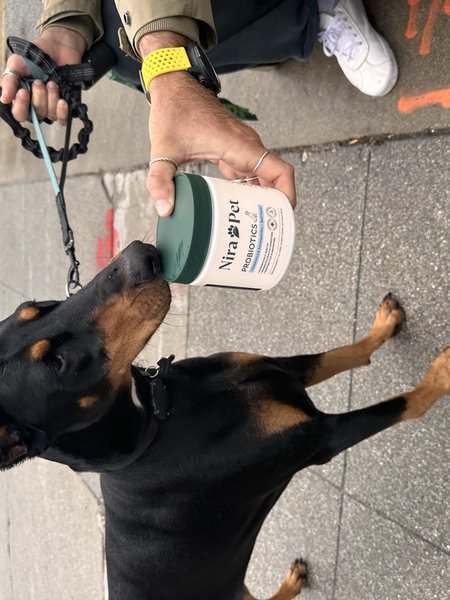
"The probiotic my vet gave helped a little after Bear's course but his poop was still soft after ten days. Switched to Nira Pet and within three days he was back to normal. My vet agreed the fuller mix made more sense."
CW
Christine W.
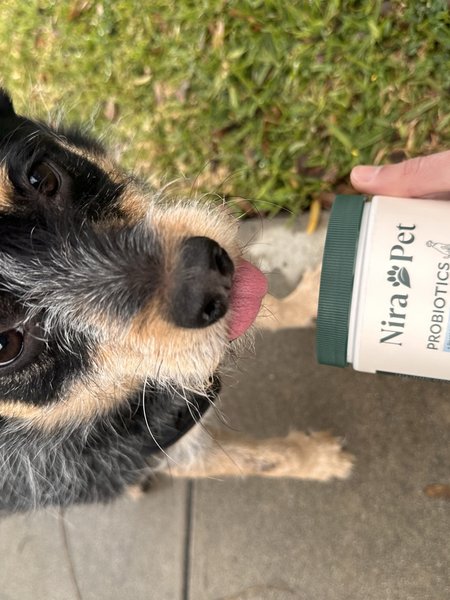
"Milo had diarrhea for nine days after his course. Started Nira Pet, normal within five days. Now I start it during every antibiotic course. No diarrhea since."
These aren't unusual stories. I hear versions of them every week now.
Here's What I Think You Should Know
If your dog just finished antibiotics and the diarrhea has started, or you're mid-course and want to get ahead of it, the problem isn't that something new is wrong.
The problem is a gut that gave up its good bacteria to beat the infection.
And you can wait it out with rice and pumpkin, knowing the symptom will fade while the gut quietly stays incomplete.
Or you can rebuild it now, while the recovery window is open.
That's not a sales pitch. That's just the math. And the science.
Nira Pet is currently running a Buy 2, Get 1 Free promotion.
That gives you enough to see the full recovery through, not just the first days when the stool settles, but the weeks of real rebuilding after. Many owners keep a spare jar on hand for the next antibiotic course too.
They also offer a 30-day money-back guarantee. Full refund if your dog doesn't improve. No questions.
I've tracked twenty-six dogs through this recovery. Twenty-three never needed a follow-up visit. I wish I'd changed my protocol years earlier.
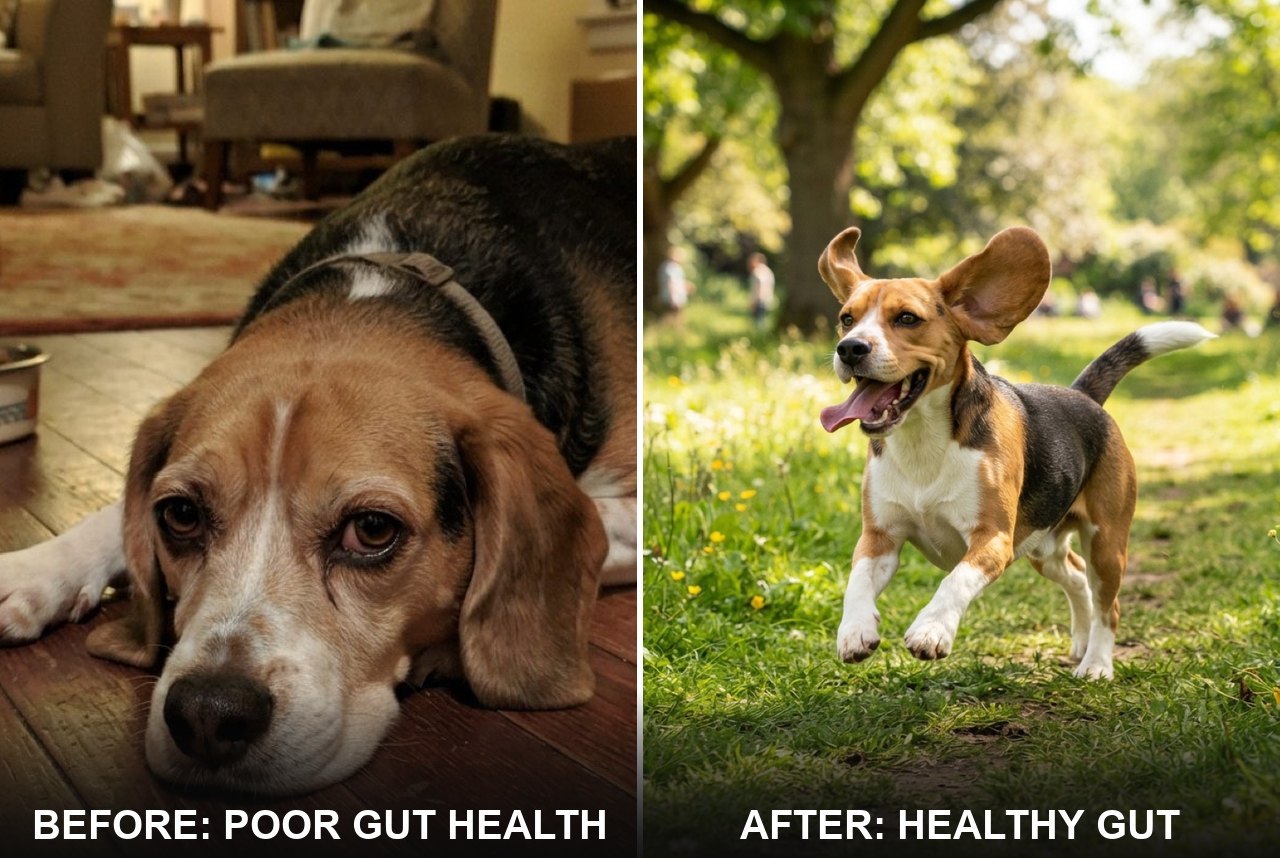
Bella, the Beagle whose 3am carpet cleanups started all this? Firm stools by day four. No repeat infections since. If I could tell every owner picking up an antibiotic prescription one thing, it would be this: the antibiotics will do their job. Plan for what comes after. That part is fixable.
How to Try It
Nira Pet sells direct. No retail, no middlemen.
They prioritize quality over mass production, which means they sell out periodically. If the link above shows availability, inventory is current. If not, they typically restock within a few days.
Every jar is covered by the 30-day money-back guarantee. No questions, even if it comes back empty.
Recommended
4.8 | 2,656 Reviews
New 5-In-1 Gut Health Soft Chew
Prebiotics + Probiotics + Postbiotics
Colostrum and Ashwagandha
Beef-Flavored Soft Chews
USA Made. 8 Third-Party Certifications.
Check Availability